Parents RISE! Opposition Letter U.S. House Energy & Commerce Committee: KIDS Act (H.R. 7757)

The Honorable Mike Johnson
Speaker of the House
U.S. House of Representatives
Washington, D.C. 20515
The Honorable Hakeem Jeffries
Minority Leader of the House
U.S. House of Representatives
Washington, D.C. 20515
The Honorable Brett Guthrie
Chairman
U.S. House of Representatives
Washington, D.C. 20515
The Honorable Frank Pallone
Ranking Member
U.S. House of Representatives
Washington, D.C. 20515

June 26, 2026

Dear Speaker Johnson, Minority Leader Jeffries, Chairman Guthrie, and Ranking Member Pallone,

Survivor parents aren’t just advocates in this process. We are the living consequences of Big Tech’s dangerous and predatory choices. For years, survivor parents have shown up to every part of the legislative process. We have sat across from Energy and Commerce Committee staff and members in hearings, markups, and meetings. We have told our children’s stories to this Committee, time and time again– not because we wanted to but because we believed that if Congress heard them enough times, they would act.  We have acted in good faith, shared our truth with the world, and campaigned passionately for the strongest possible legislation. We have been clear about what meaningful legislation requires and what we will not accept. Yesterday, House leaders announced a deal to move the KIDS Act toward a floor vote. Unfortunately, it falls well below those standards.

Though tragedy has changed us, it has not weakened us, and we know a bad bill when we see one. It is a particularly grievous affront that in the wake of Social Media Victims Remembrance Day– a day created to honor our children’s lives lost to negligence – a package shaped by Meta and Big Tech is being sold as progress,  when in reality it would leave more families memorializing their children next year. 

This bill, as written, would actually make things worse because it creates the illusion of protecting children while weakening the very laws and legal pathways families rely on to hold technology companies accountable. Parents will believe Congress has made their children safer, when in reality many of the protections they need, and many of the tools available to seek justice, will be weaker than they are today.

We have many concerns with this package, but the following fundamental failures alone are enough to disqualify this bill outright.

It eliminates the duty of care and we will not accept any kids’ online safety bill without one. The bill removes the duty to prevent and mitigate depression, anxiety, eating disorders, substance use disorders, and suicidal behaviors, despite years of evidence showing platforms knew what their design choices were doing to children and chose growth over safety. Section 213(c)(2) says nothing in the bill “may be construed to impose a duty of care.” That clause was written for a courtroom, and companies will use it to delay grieving families seeking accountability.

It expressly exempts the very harms that killed our children, handing Big Tech an escape hatch from the consequences of its own predatory choices.The bill disclaims platform responsibility for eating disorders, suicidal behavior, depression, and addiction. Under this bill, platforms have no obligation to even have a policy addressing the harms that took our kids. No obligation means no accountability.

It leaves children unprotected where so many online harms actually occur. Children are groomed, sexually exploited, bullied, and financially manipulated not only on social media, but through games, messaging apps, virtual reality, and other interactive platforms. A child safety law that excludes places where children are being harmed cannot protect them.

It falls short on AI chatbot harms. Children are already becoming emotionally dependent on systems that simulate friendship, romance, and therapy and are being sexually abused by these products. Yet the bill does not set clear safety standards, prohibit features that encourage attachment and excessive engagement, or even tell companies that it is not okay to put a product they know is dangerous on toy store shelves. Instead, it leaves companies to decide what protections are “reasonable.” We will not accept voluntary policies written by the very companies creating these dangers.

We have been patient. We have given this process every good-faith effort despite the pain it causes us every time. The text of this bill does not reflect a shared goal of protecting children. This bill doesn’t pass the parent test, and we urge you to stop this package from reaching the House floor. We call on every Member of Congress to vote no and stand with families, not Big Tech.

We did not create Social Media Victims Remembrance Day so that our children’s names could be used as cover for a bill that protects the very companies that harmed them. We remember them as joyful, whole people, and it is these memories for which we fight. We are asking Congress to fight in their memory,  not betray it.

Sincerely, 

Parents RISE!

Amy Neville, Alexander, Forever 14
Brandy Roberts, Englyn, Forever 14
Bridgette Norring, Devin, Forever 19
Erin Popolo, Emily,  Forever 17
Kristin Bride, Carson, Forever 16
Julianna Arnold, Coco, Forever 17
Lori Schott, Annalee, Forever 18
Mary Rodee, Riley, Forever 15
Toney Roberts, Englyn, Forever 14

The Next Digital Reckoning: How AI Puts Kids at Risk — and Why Lawmakers Aren’t Ready

Every parent remembers when social media first seemed harmless — a place for kids to connect, learn, and belong. We now know better.

That same promise of connection turned into an industry of addiction, exploitation, and grief — all shielded by outdated laws.

Now, a new wave of technology is upon us: Artificial Intelligence (AI). And once again, children are being left unprotected.

AI Is Already Shaping Childhood

AI isn’t science fiction anymore — it’s embedded in nearly everything our kids use. It powers the algorithms that decide what they see online, the chatbots that mimic friendships, the filters and avatars that shape self-image, and even the deepfakes that blur what’s real.

“This time, our children are not just the users, they’re the experiment.”

Already, we’re seeing disturbing trends:

  • AI-generated child sexual abuse material (CSAM) that depicts fake children but fuels real harm.
  • AI chatbots and voice clones used by predators to manipulate or groom minors.
  • Synthetic influencers and “AI best friends” marketed directly to kids, normalizing emotional dependence on machines.
  • Deepfake bullying where a child’s face or voice is used for humiliation or blackmail.

And still  there are no federal laws specifically protecting children from these new threats.

The Policy Vacuum

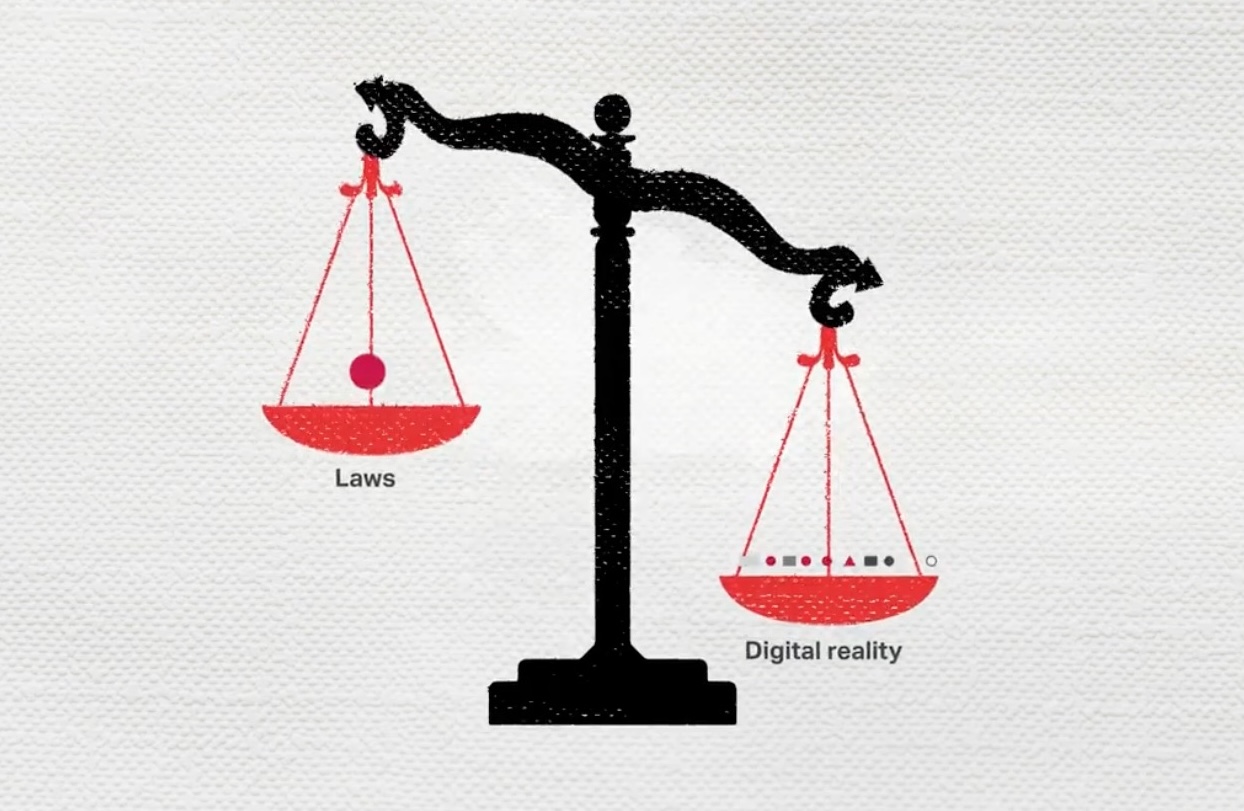
While tech companies race to dominate the AI market, Congress and regulators remain years behind. There are no national safety standards for child-facing AI, no age verification requirements for AI-powered products, and no enforcement mechanisms when harm occurs.

Even existing laws — like Section 230 and the Children’s Online Privacy Protection Act (COPPA) — were written before the rise of generative AI, deepfakes, or algorithmic learning.
They simply don’t apply to the realities of today’s internet.

That means parents are left with all the risk and corporations keep all the reward.

The Myth of “Innovation First”

Tech executives warn that regulation will “stifle innovation.”
But what they really mean is: it will stifle profits.

We’ve heard it before — with tobacco, cars, and social media. The same pattern repeats: move fast, ignore harm, apologize later.

Except this time, the product isn’t a cigarette or an app, it’s the reality our kids live in.

When there’s no accountability, the incentive is to exploit, not protect. The human cost — anxiety, addiction, exploitation, and trauma — is treated as collateral damage in the pursuit of growth.

What We Need Now

We don’t have to accept this future. Parents and lawmakers can act but the time window is closing fast.

Parents RISE and our allies are calling for a new generation of digital policy that puts children’s safety before corporate profit.

We’re demanding:

  • Federal AI accountability laws requiring transparency, safety testing, and independent oversight for all child-facing AI tools.
  • Explicit bans on AI-generated child sexual abuse material, with enforcement across platforms and nations.
  • Ethical design standards ensuring AI systems for minors are safe, age-appropriate, and not emotionally manipulative.
  • Algorithmic transparency, including public reporting on youth-related risks and impacts.

Parents Can Lead the Way

We can’t wait for Silicon Valley to find its conscience — or for Congress to act after the next tragedy. As parents, we’ve seen what happens when technology outpaces responsibility. We won’t let history repeat itself.

“We’ve already lost too many to the last tech revolution. We won’t lose another generation to AI.”

This fight isn’t anti-technology. It’s pro-human, pro-family, and pro-accountability.

Together, we can build a digital future rooted in safety, dignity, and truth — one where our children’s data, images, and emotions are not raw materials for corporate gain.

Why Section 230 Must Change – and What It Means for Your Family

Every time you hand your child a phone or allow them to go online, you trust that the digital spaces they enter will be safe. But the truth is, they’re not—and a decades-old law called Section 230 is one major reason why.

What Is Section 230?

Passed in 1996, Section 230 of the Communications Decency Act was created when the internet was still young. It was designed to protect websites from being held responsible for what users post. In theory, it encouraged free speech and innovation online.

But nearly thirty years later, that same law has become a shield for some of the most powerful corporations in history—Big Tech companies like Meta, Google, TikTok, and Snapchat—allowing them to profit from harm without accountability.

The Consequences for Families

Because of Section 230, tech companies can’t be sued even when:

  • Algorithms knowingly amplify harmful content to children.
  • Platforms recommend predators, drug dealers, or self-harm groups to vulnerable users.
  • Companies ignore repeated warnings about the exploitation or death of children on their apps.

These harms aren’t rare. They’re systematic.


Last year alone, over 36 million reports of child sexual abuse material were filed—most linked to major social-media platforms. Drug dealers use encrypted messaging and disappearing-content features to sell fentanyl to teens. Predators use recommendation algorithms to groom and exploit children.

And through it all, companies claim immunity—because Section 230 says they’re not responsible for what happens on their platforms, even when their design choices make it possible.

Why Reform Matters

Reforming Section 230 doesn’t mean ending free speech. It means ending impunity. It means that billion-dollar companies should face the same basic accountability that every other industry does. If an automaker sells cars with faulty brakes, or a toy manufacturer releases a dangerous product, they can be held liable. Why should the rules be different online—especially when children’s lives are at stake?

Modernizing this outdated law would:

  • Allow victims and families to seek justice when platforms cause foreseeable harm.
  • Force companies to prioritize safety over profit, changing the incentive structure behind harmful design.
  • Create a safer digital environment for children, families, and communities.

What It Means for You

Parents, caregivers, and families are on the front lines. We see the real-world consequences of an unaccountable tech industry—anxiety, addiction, exploitation, and loss.
But we also hold the power to change it.

By speaking up, organizing, and demanding accountability, parents can drive a new era of responsibility online. Reforming Section 230 isn’t about politics; it’s about protecting our children, our communities, and our future.

From Passage to Pause — Why Parents RISE Was Born

In mid-2024, the Senate overwhelmingly approved the Kids Online Safety Act (KOSA), in a rare bipartisan vote of 91-3. The legislation was built around the idea that tech platforms bear a “duty of care” toward minors—requiring default privacy protections for children, disabling addictive design features, and giving parents new tools to protect their kids online.

But despite that strong Senate support, the bill stalled in the House and never became law. Lobbying from Big Tech, concerns about free speech, and other legislative priorities meant the momentum faded as the congressional term ended. 

For many parents, this was gut-wrenching because we weren’t lobbying from theory — we were acting from experience. We saw children harmed, families shattered, and platforms built for engagement without regard for the consequences. We had trusted the assurances of tech companies that their products were safe. And we had done everything we could as parents: talked to our kids, used safety tools, set limits—yet still lost our most precious loves.

That’s why Parents RISE was founded. We recognized that passing a law is just one step. Real accountability means being present, organized, and powerful, and combining lived-experience, advocacy, and policy to make sure this issue never gets sidelined again. 

We are survivor-parents turned advocates. We are turning grief into action. We’re demanding that children’s lives come before corporate profit, and we’re mobilizing now so that when the next opportunity comes — whether the revival of KOSA or another legislative vehicle — we’ll be ready.

Together, we will not let another chance slip away.